| Element | What it involves | Planning use |
|---|---|---|
| Recitation | Poets speak rhymed verse aloud, because the form is considered to live in the human voice at live readings and gatherings | Expect most sessions to be listening, so choose seats where you can hear |
| Music | Songs sit beside poems, including a working cowboy’s own compositions and traditional songs at a Library of Congress concert | Treat the programme as poetry and music together, not poetry alone |
| Seminars | A Library of Congress Cowboy Poetry Day paired an afternoon seminar with an evening poetry reading | Look for talks and discussion as well as stage readings |
| Food and company | Described as a jubilee of conversation, singing, dancing, stories and big steaks | Allow time for meals and socialising, which are part of the event |
| Audience | Cattle people, rural folks, poets, musicians, western enthusiasts and curious urban dwellers | Newcomers are part of the usual crowd |
These descriptions come from the Library of Congress cowboy poetry guide and the brief guide to cowboy poetry on Poets.org.
So what is a cowboy poetry gathering? It is a live event where people perform and listen to rhymed verse about ranch life, usually with music, food and storytelling around it.
This page explains the event itself. The wider field of cowboy poetry gatherings is covered on the hub page, and the history of cowboy poetry gatherings has its own guide.
What you will see and hear
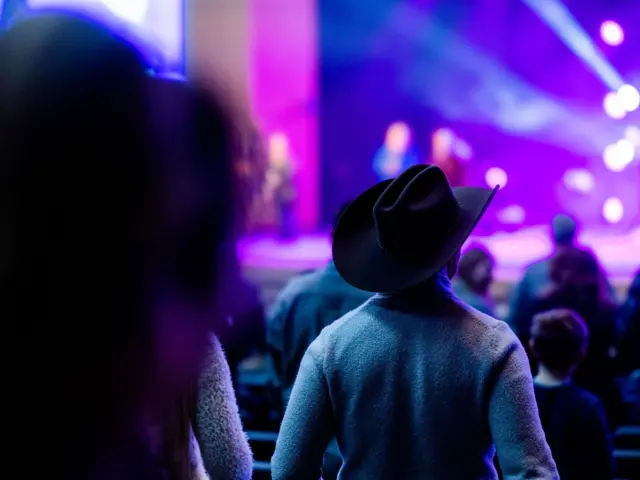
A gathering is built around spoken poems, but it is not a single reading. One public library description of the National Cowboy Poetry Gathering says people listen to poetry and music and learn about cowboy culture in the U.S. and around the world. The same description lists films, crafts, food and storytelling among the activities. The event it describes is week-long and held in Elko, Nevada.
In practice the mix works like this:
- Poetry on stage. Poets stand and speak their verse, often from memory or from the page, to a seated audience. This is the core of the programme and the reason the event exists.
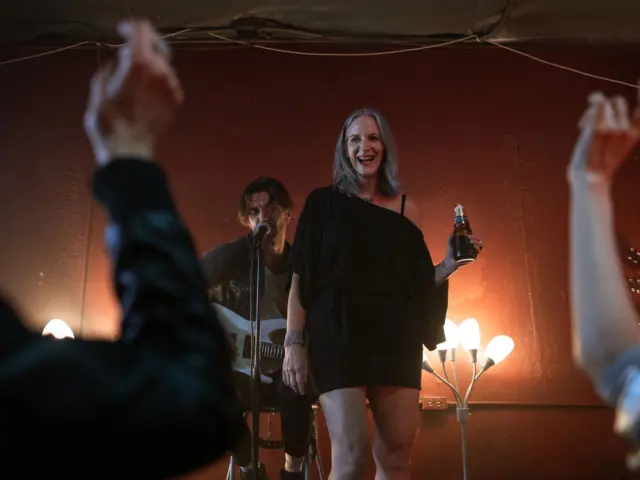
- Music alongside the poems. Singers and musicians share the programme. At a 2005 Library of Congress concert, the working cowboy D. W. Groethe performed his own compositions as well as traditional songs, which shows how closely the two forms sit together.
- Talks and learning sessions. A seminar followed by an evening reading was the format of one recorded Cowboy Poetry Day. Sessions that explain the culture behind the verse are a normal companion to the readings.
- Meals, crafts and conversation. Poets.org describes the Elko event as a jubilee of conversation, singing, dancing, great hats and boots, stories and big steaks. The social side is part of the design.
This answers a common newcomer question. A gathering is not only poetry. If you want just the verse, choose the reading sessions. If you want the full atmosphere, add the music, the talks and the meals.
Where events are held
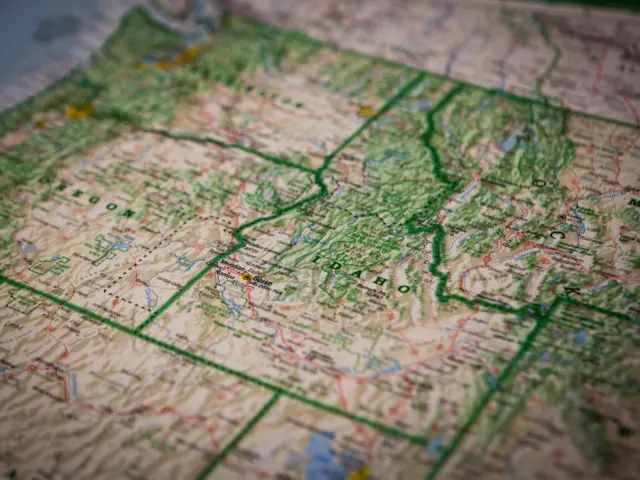
At the National Cowboy Poetry Gathering, most events take place at the Western Folklife Center, with the Elko Convention and Conference Center as the second main venue. Smaller regional gatherings follow the same pattern on a local scale, bringing together poets and musicians who are carrying on western culture.
Who performs and who attends
Performers and audience overlap heavily, and that is one of the clearest differences from a conventional reading. The Western Folklife Center’s page for the 41st Gathering invites poets and singers of songs, cowhands, land stewards, ag teachers and 4-H and FFA youth, along with the family and friends who lend a hand at branding time. The people on stage often come from the working life the poems describe.
The audience is wider than the performers. Poets.org says that every January cattle people, rural folks, poets, musicians, western enthusiasts and curious urban dwellers gather in Elko. A newcomer with no ranch background is therefore a normal member of the crowd, and the performers speak to a mixed room.
How a gathering differs from an ordinary poetry reading
A cowboy poetry gathering differs from a general poetry reading in its subject, its form and its setting. Poets.org says cowboy poetry is distinctive both in its culturally specific subject matter and its traditional use of rhyme and meter. Many modern readings favour free verse on any subject, so the steady rhythm and rhyme here are the first thing a newcomer notices.
Three differences matter most when you decide what to expect:
- Subject matter. The particulars come from the American West, including horses, cattle, fire and prairie storms, along with mythic cowboys and ranchers. Poems read as scenes from a shared working world rather than private reflection.
- Sound and structure. Forms such as ballads and odes, and devices such as mnemonics and repetition, set the genre apart. These devices help a poem hold together when it is heard once, aloud, without a page in front of you.
- Live delivery. Most people who write about the form argue that cowboy poetry lives in the human voice, during live readings and gatherings. The performance, including pacing and delivery, is part of the work, so a gathering shows the form at its fullest.
Surrounding the readings with music, meals and conversation also changes the mood. The event feels closer to a community reunion than to a lecture hall, and that is a good reason to attend at least one full day rather than a single session.
The rhymed verse at the centre
Cowboy poetry has a working definition that explains what you will hear. A summary of the definition used at the 1985 National Gathering says cowboy poetry is rhymed, metered verse written by someone who has lived a significant portion of his or her life in Western North American cattle culture. Rhyme and meter are the form. Lived experience of cattle culture is the qualification.

That definition has a practical consequence. Poems usually rhyme in a predictable pattern with a regular beat, so even first-time listeners can follow the rhythm and anticipate the next line. The same summary traces the structural style to the ballad style of England and the Appalachian South, which explains why many poems sound like spoken songs.

Where the form comes from
The Library of Congress guide says cowboy poetry in the United States dates back to the period of the long-distance cattle drives from Texas to Kansas. As a genre it has also been influenced by literary works, popular writers, Hollywood cowboy films and country-western music. That mixed ancestry is why a gathering can feel part folk tradition and part songwriters’ circle.
Ranching, the Western Folklife Center and the Elko gathering
Ranching is both the subject of the poems and the reason people trust the performers. The same library summary says the verse reflects an intimate knowledge of that way of life, and the community from which it maintains itself in tradition. When a poet describes a storm or a branding day, the audience often knows the work from experience.
The best-known event is organised by the Western Folklife Center. Poets.org notes that, launched in 1985, the Gathering is a program of the Western Folklife Center, a regional nonprofit. The Library of Congress adds that the gathering has grown into a week-long event that draws participants from around the country. Many other cowboy poetry gatherings exist in almost all Western states, but Poets.org calls the Elko event the most popular.
Readers who want to run an event of their own will need a different guide from this definitional one. Anyone simply deciding whether to attend can treat the Elko gathering as the reference model for what a gathering looks and sounds like.
Frequently asked questions
Is a cowboy poetry gathering held only in Elko?
No. Poets.org says many cowboy poetry gatherings exist in almost all Western states, though the Elko event is the most popular.
Do I need ranching experience to attend?
No. Audiences include curious urban dwellers and western enthusiasts as well as cattle people and rural folks, according to Poets.org.
Is the Elko gathering officially recognised?
Yes. In 2000, Congress designated the annual cowboy poetry gathering in Elko, Nevada, as the National Cowboy Poetry Gathering.
Does each gathering have a theme?
The National Gathering can. The 41st, held January 26 to January 31, 2026, at the Western Folklife Center in Elko, used the theme “A Cow Town State of Mind”.